
Jefferson County Criminal Court Records
A criminal court record is the case-level file kept by the court after charges are filed. In Jefferson County, the Clerk of Superior Court is the records hub for Superior, State, and Juvenile Court case files. The Clerk is custodian of criminal, civil, traffic, and juvenile records for those courts. Felony cases generally route through Superior Court. Misdemeanor and traffic cases may route through State Court, municipal court, or another authorized court depending on the charge and issuing agency.
This record is different from an arrest report. Sheriff's records may show the arrest event, incident report, citation, inmate record, or jail status. The court case file shows what prosecutors filed, what the court did with the case, and how the charge ended. For closer detail on the arrest-to-charge path, use Jefferson County court charge records. For the broader civil, probate, traffic, and real estate record system, use Jefferson County court records.
The Georgia Courts data and records page is a statewide starting point for court services, e-access, forms, and directories.
That statewide page helps identify court tools, but Jefferson County case verification still starts with the local custodian.
Search Jefferson County Criminal Court Records
Jefferson County does not have a confirmed free anonymous countywide criminal case portal. For Superior and State Court criminal cases, contact the Clerk of Superior Court at 202 E Broad Street, Louisville, phone 478-625-7922. Ask whether the file is public, whether the request needs a case number or defendant name, and whether copies or certified copies can be prepared. If the matter began as a city citation or ordinance case, the docket may remain with Louisville, Wadley, Wrens, or Stapleton Municipal Court.
- Identify whether the case is felony, misdemeanor, traffic-related, municipal, juvenile, or federal.
- For Superior or State Court criminal records, begin with the Clerk of Superior Court.
- Use Georgia E-Access or PeachCourt only with the understanding that provider accounts may be required.
- Check the docket and disposition, then ask for the filed document or certified copy if the result must be proved.
- For federal charges, search PACER or the Southern District of Georgia instead of county court.
PeachCourt provides Georgia civil and criminal e-filing and court-document access.

PeachCourt is useful for electronic access, but sealed, adoption, and unexecuted proposed-order documents are excluded from its document service.
Jefferson County Criminal Case Flow
Criminal court records change as the case moves from filing to outcome. A charge may start with an arrest, citation, warrant, accusation, or indictment. The case then moves through arraignment, pretrial motions, hearings, negotiation, trial, plea, disposition, and sentencing. Not every case has every stage. Some charges are amended, reduced, dismissed, nolle prossed, or resolved by plea.
Case flow: Charges Filed › Arraignment › Pretrial and Motions › Plea or Trial › Disposition › Sentencing
| Stage | What the Record May Show |
|---|---|
| Charges filed | Accusation, indictment, citation, warrant basis, or charging document filed with the court. |
| Arraignment | Formal court event where the charge is addressed and a plea may be entered. |
| Pretrial and motions | Bond orders, discovery notices, continuances, motions, orders, and hearing entries. |
| Plea or trial | Guilty, not guilty, nolo plea, verdict, mistrial, dismissal, or other case event. |
| Disposition and sentence | Final outcome, sentence, probation, fines, restitution, or court costs when imposed. |
The Prosecuting Attorneys' Council listing identifies Tripp Fitzner as the Middle Judicial Circuit District Attorney.

The DA role matters because prosecutor decisions determine how arrest allegations become formal court charges.
What Jefferson County Criminal Records Show
A Jefferson County criminal case file may include the case number, defendant, court, filing date, arrest or citation date, charges, bond orders, attorneys, docket entries, motions, hearing dates, pleas, disposition, sentence, probation terms, fines, restitution, and court costs. The exact public view may vary by court, provider account, case age, and restriction status. Juvenile matters and sealed parts of a file are not ordinary public records.
| Field | What It Shows |
|---|---|
| Case number | The court identifier used by the Clerk, docket, filing system, or provider. |
| Defendant | The person accused in the court case, often with identifying details redacted or limited. |
| Charges | The offenses filed by citation, accusation, indictment, or other charging paper. |
| Bond and warrants | Release terms, bond orders, bench warrants, or arrest-warrant context when part of the file. |
| Plea | Guilty, not guilty, nolo contendere, or other formal response when recorded. |
| Disposition | Dismissed, guilty, acquitted, nolle prossed, reduced, amended, or other outcome. |
| Sentence | Jail, probation, fine, restitution, conditions, or other punishment after conviction. |
The Middle Judicial Circuit District Attorney website states that the office serves Candler, Emanuel, Jefferson, Toombs, and Washington Counties.
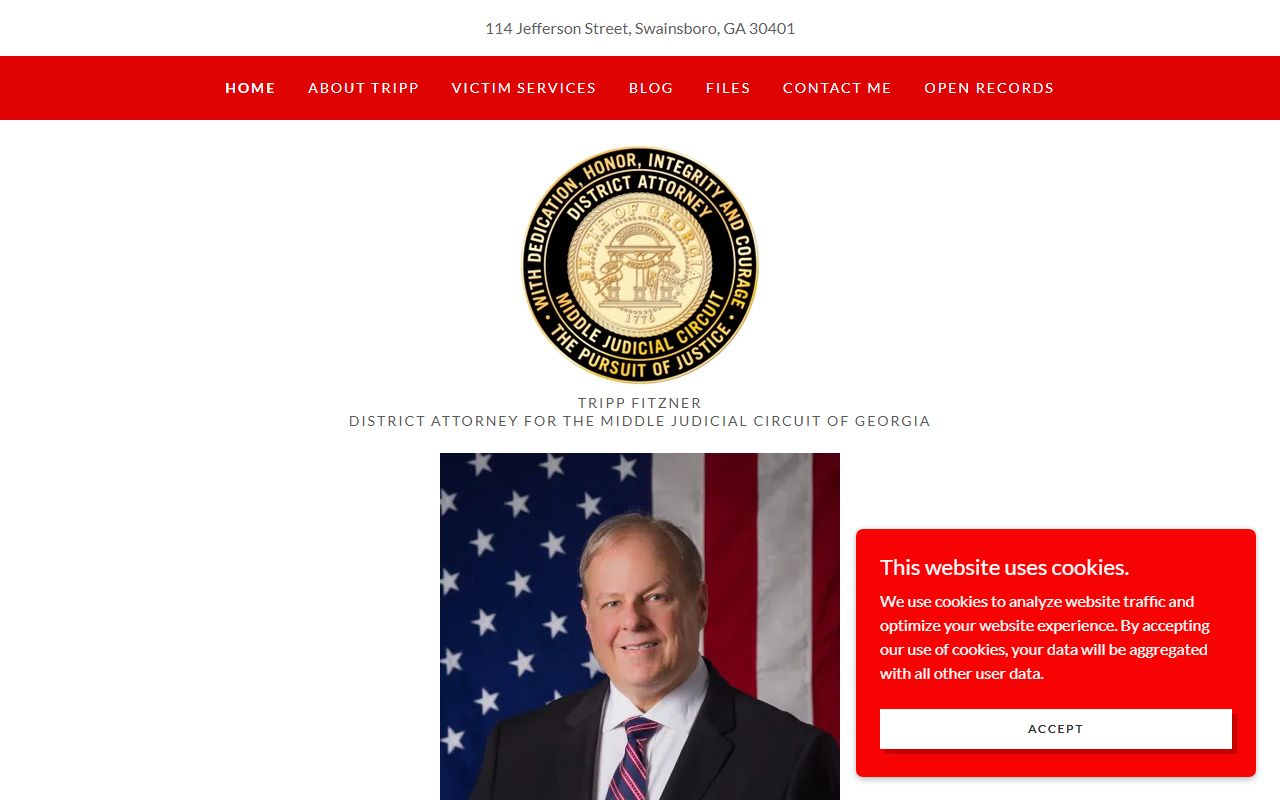
That circuit context helps explain why the prosecutor office is not limited to one county website page.
Jefferson County Charges vs Convictions
A charge is an accusation filed or pursued in the criminal process. A conviction is a court outcome based on a guilty plea, nolo plea accepted by the court, or guilty verdict. A Jefferson County criminal court record can show charges that were amended, reduced, dismissed, nolle prossed, or resolved without conviction. Reading only the first charge line can misstate the final result.
| Point | Charge | Conviction |
|---|---|---|
| Meaning | An accusation or filed offense | A final finding or accepted plea of guilt |
| Timing | Appears early or after prosecutor review | Appears after plea, trial, or final disposition |
| Can change | May be amended, reduced, dropped, or dismissed | May later be corrected, appealed, restricted, or sealed if law allows |
| Best proof | Charging document and docket | Disposition, sentence sheet, judgment, or certified court copy |
The Georgia Public Defender Council is the official statewide public-defense route captured in the research.

No Jefferson County-specific public defender office address was captured, so the statewide search route is the supported source.
Sealed and Restricted Criminal Records
Georgia users often say expungement, but the GBI uses the term record restriction for eligible criminal-history records. Under O.C.G.A. 35-3-37, eligible Georgia criminal-history records may be restricted for non-criminal-justice purposes. For arrests after July 1, 2013, the GBI says the person contacts the prosecutor. For arrests before that date, the applicant uses the arresting agency route with the GBI request form. The arresting agency may charge up to $50, and some GBI processing may require a separate $25 money order or certified check when the prosecutor cannot enter the restriction directly.
Restriction is not the same as sealing a court file. A GCIC restriction does not automatically remove every local docket, jail record, public filing, or private copy. Court sealing is a separate court process, and Uniform Superior Court Rule 21 governs limits on access to court files. Rule 21.6 addresses protected identifiers. Juvenile, adoption, mental-health, sealed, and protected-identifier records require special handling.
| Point | Sealed Court Record | Restricted Criminal History |
|---|---|---|
| Source | Court order, rule, or law limiting file access | GBI/GCIC criminal-history process under Georgia law |
| Effect | Limits public view of the court file or parts of it | Limits eligible history for non-criminal-justice purposes |
| Route | Court procedure and judge approval when required | Prosecutor route for post-07/01/2013 arrests or arresting-agency form for older arrests |
| Limit | May not change agency records outside the file | May not remove court dockets, jail records, or private copies |
The Georgia.gov record restriction guide explains Georgia's expungement and restriction route.
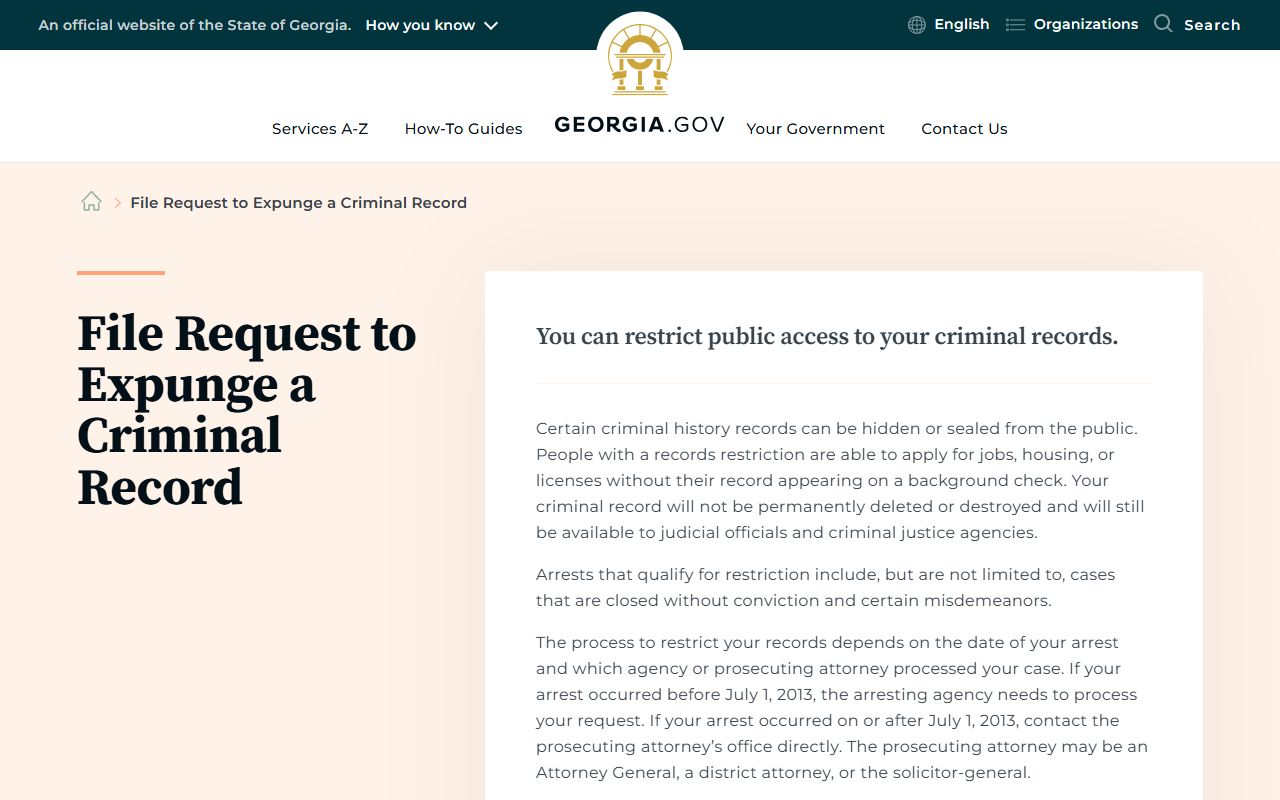
The research notes Georgia.gov says GCIC usually processes complete applications within two to three weeks.
Public Access to Criminal Records
Criminal court files are generally public unless a law, court rule, or court order limits access. Georgia's Open Records Act supports public inspection of government records, but court files also follow court-access rules. The Clerk of Superior Court is the local custodian for Superior, State, and Juvenile case files. Sheriff's arrest, incident, inmate, citation, and jail records are a separate law-enforcement channel through the Sheriff's Records Division.
Background checks need care. The Georgia Bureau of Investigation criminal-history FAQ explains what can appear in Georgia criminal history, but a court case file is still the best source for the final court outcome. Consumer-reporting, employment, tenant, credit, and insurance uses raise separate FCRA issues. A casual court lookup should not be treated as a regulated background-check product.
Important: A public criminal case lookup is not the same as an FCRA-compliant consumer report.
Federal Criminal Court Records
Federal criminal cases involving Jefferson County are not held by the Jefferson County Clerk of Superior Court. Jefferson County is in the Southern District of Georgia, Augusta Division. PACER lets users search federal cases by court or through the nationwide Case Locator. PACER registration has no fee, but access fees may apply after login. The Southern District CM/ECF system is the federal case-management and electronic-filing path. Bankruptcy court records are separate from district criminal cases.
The PACER Find a Case guide explains federal case-search choices.
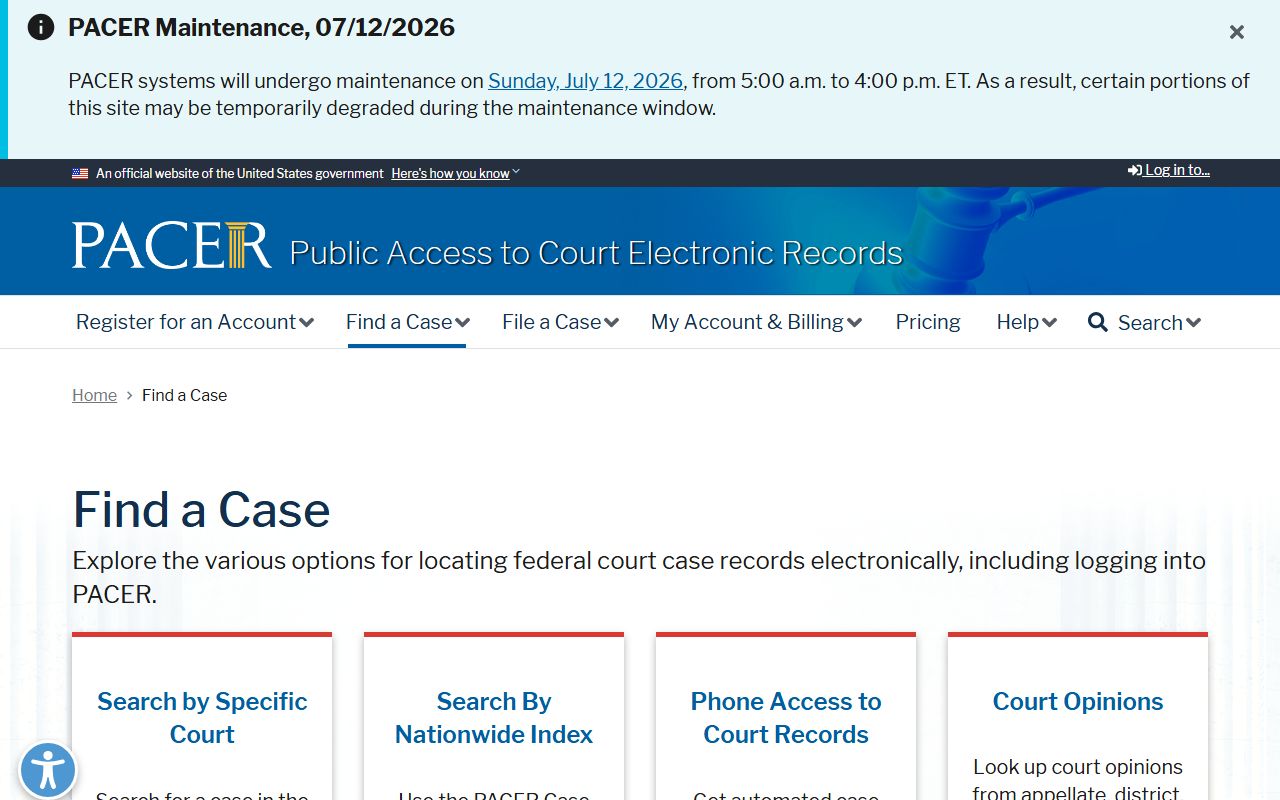
PACER is the federal docket route when a case is outside Georgia state court.
The PACER registration page describes account setup for case search only.
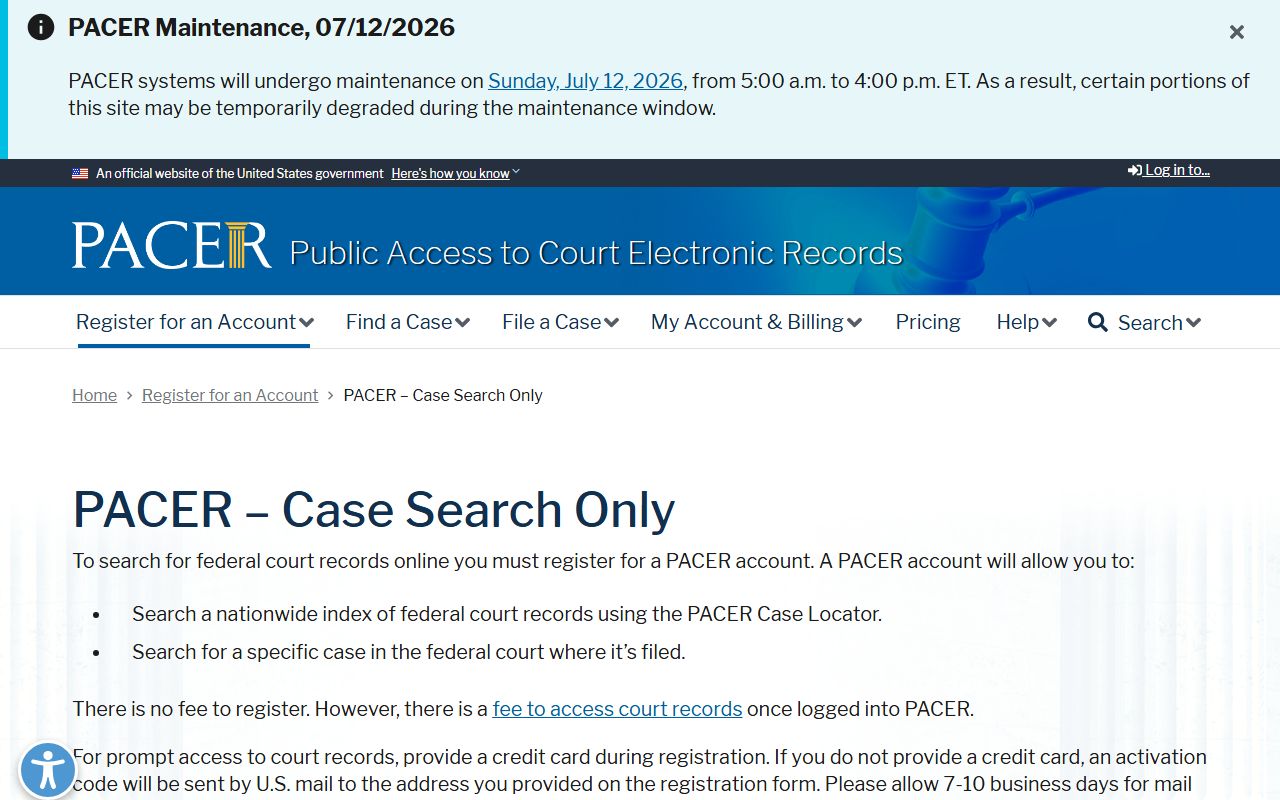
Account access is a core federal search requirement, much like provider accounts in some Georgia court tools.
The Southern District of Georgia CM/ECF lookup identifies the federal district court system.
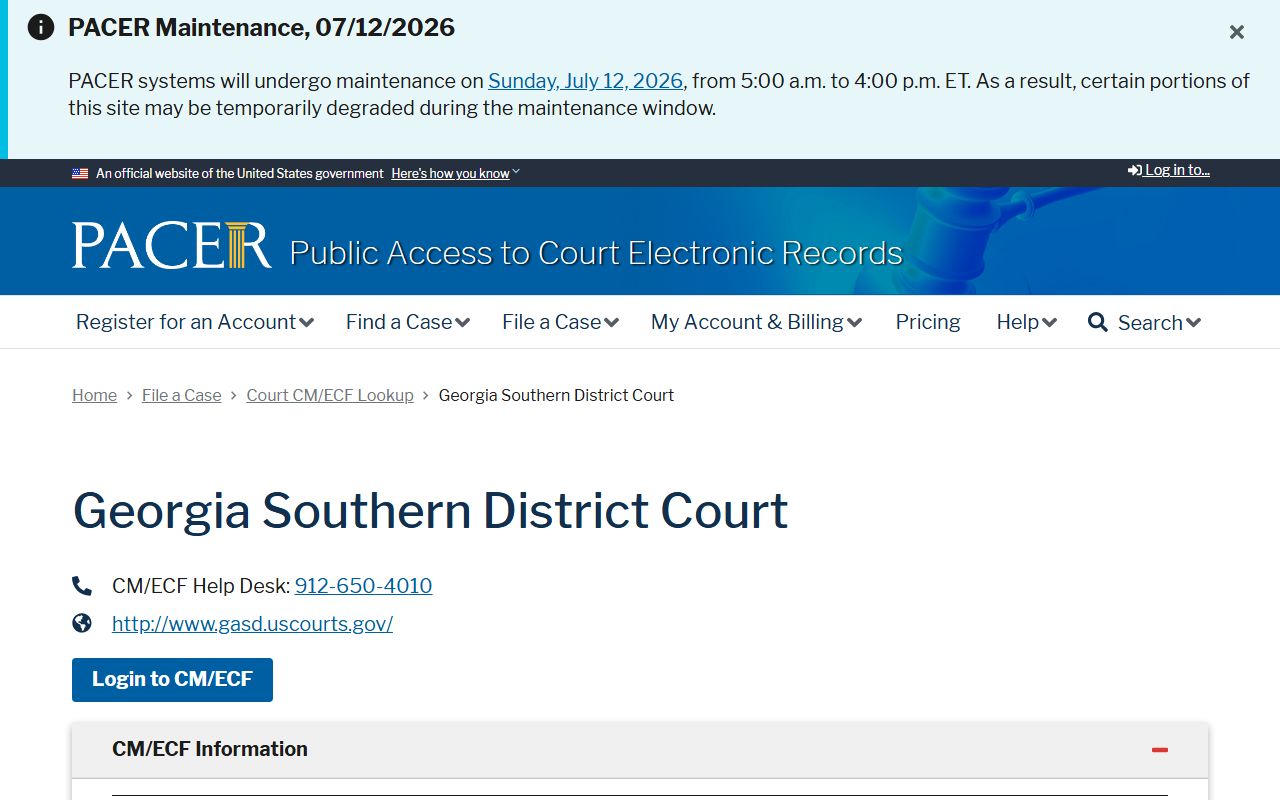
Use that lookup for federal district court access, not Jefferson County Superior Court access.
The Southern District bankruptcy CM/ECF lookup is separate from district criminal court.
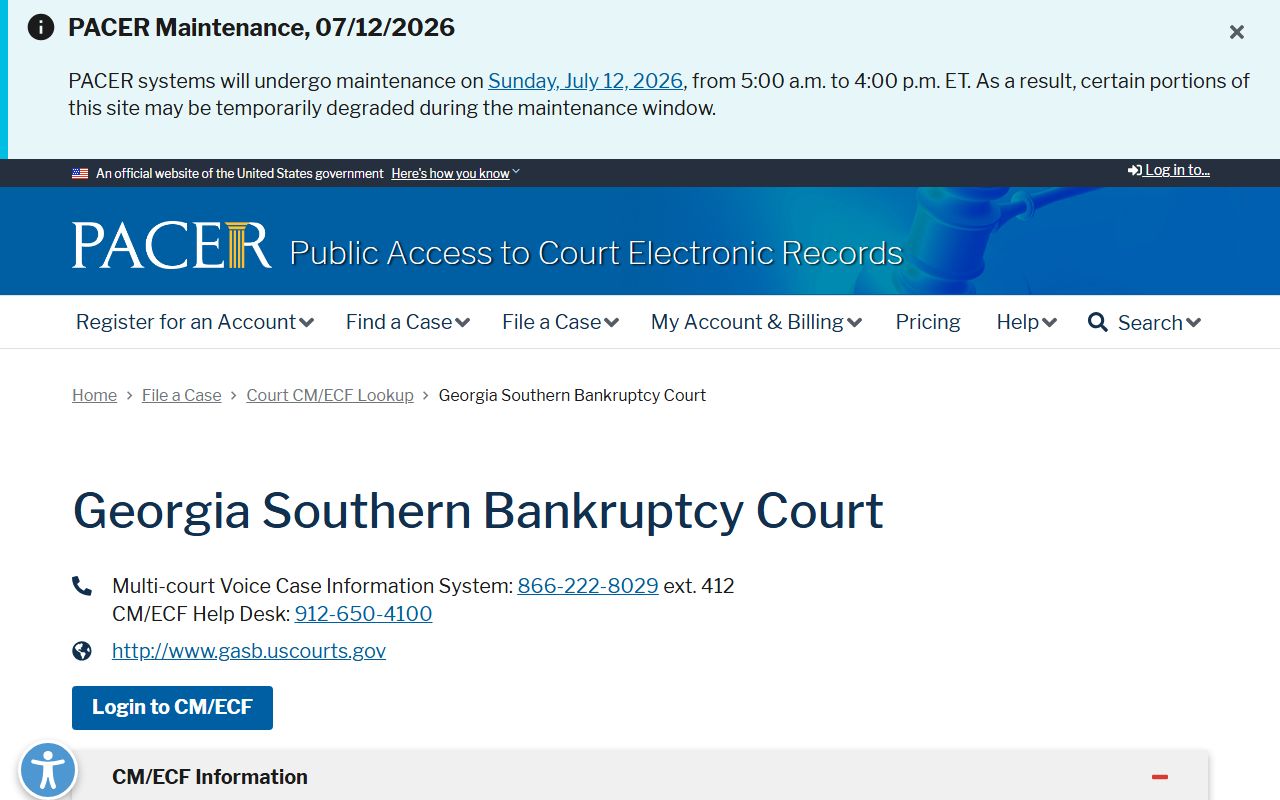
Bankruptcy searches should not be confused with Jefferson County criminal court records.
The general PACER CM/ECF court lookup provides a broader federal court search path.
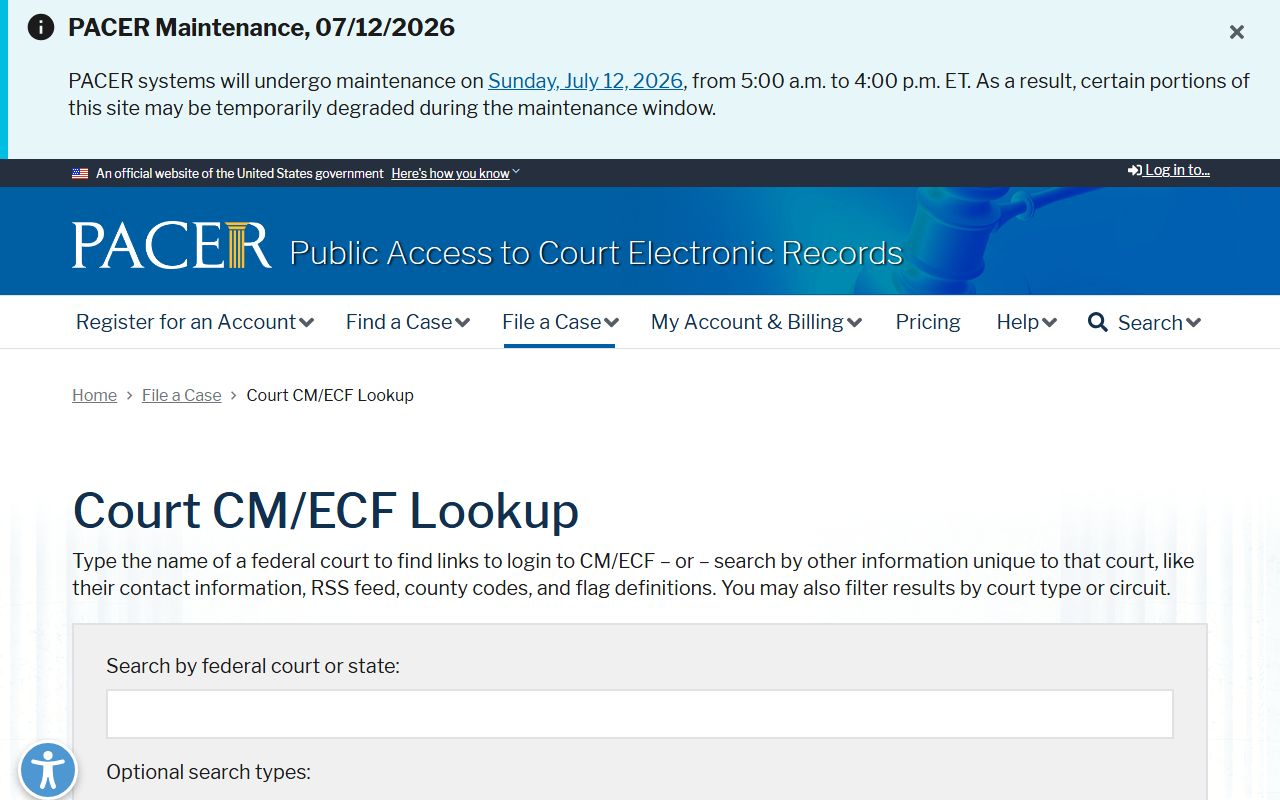
Federal lookup tools help only when the case is in a federal court, not a Jefferson County state court.
Restricted Jefferson County Criminal Records
Restricted criminal records include juvenile matters, sealed files, protected identifiers, adoption-related records, sensitive Probate Court mental-health matters, and records limited by court order. Ongoing criminal cases may also have documents that are not visible through a provider account. A person who needs a sealed or restricted criminal record should ask the court about eligible-party access or seek legal advice before filing a request.
For a final outcome, rely on the disposition or certified copy rather than a booking note. A criminal case can have several charge lines, amended charges, reduced charges, dismissed counts, or a sentence that applies only to some counts. The Clerk can explain copy and certification procedure, but court staff cannot provide legal advice about what the record means for employment, immigration, licensing, probation, or appeal deadlines.
Note: The research found no official Jefferson County public criminal sample record available without provider access.