
Jefferson County Arrest Records and Charges
Arrest records in Jefferson County begin on the sheriff or police side of the system. They may include the arresting agency, arrest date, incident or citation link, booking status, and the charges listed at the time of arrest. The Jefferson County Sheriff's Office is the local law-enforcement office, and Sheriff Gary Hutchins is the elected sheriff. The Sheriff's Records Division stores incident, accident, juvenile, inmate, and citation records generated by the office. Those records are not the same as a final court case file.
The court charge record starts when the prosecutor decides what to file. In Jefferson County, Superior and State criminal court records are kept through the Clerk of Superior Court, while prosecution decisions route through the Middle Judicial Circuit District Attorney. A sheriff arrest record can show the offense suspected at booking. A court charge record shows what the prosecutor filed, what the court accepted, and how each charge later changed. For the full criminal case file, including pleas, motions, dispositions, and sentencing, use the criminal court records page.
The sheriff's main page shows division contacts and legal-agency links at the official Sheriff's Office page.
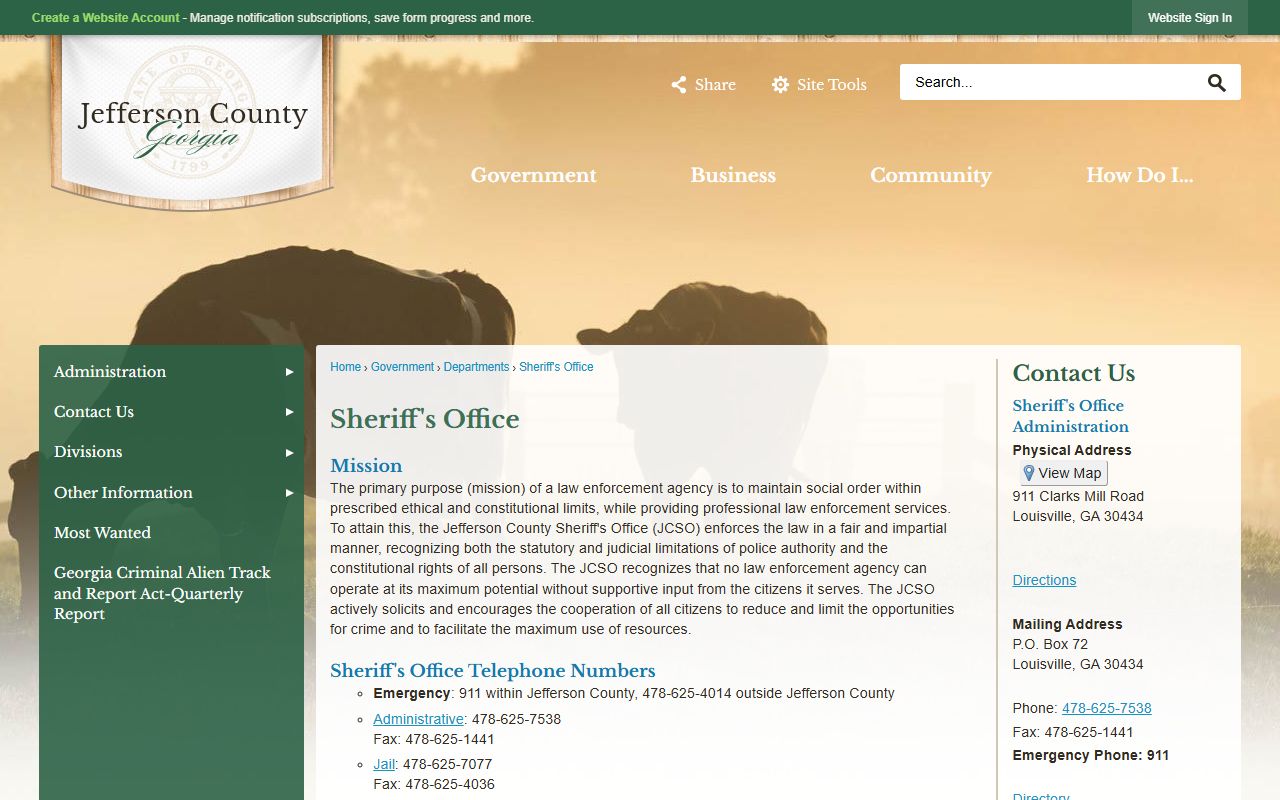
That office is the first local source for arrest-side records, while the clerk and courts handle formal charges and case outcomes.
Search Jefferson County Arrest Records
Jefferson County did not publish a confirmed official online arrest database in the research set. The practical search path is split by custodian. For arrest reports, incident reports, jail records, and inmate records, contact the Sheriff's Records Division at the Law Enforcement Center. For filed charges, bond orders, case history, and final disposition, contact the Clerk of Superior Court or use court-access routes when available. Georgia E-Access and PeachCourt can help with some court records, but they are not a complete booking or arrest log.
- Start with the record type. Booking, incident, accident, citation, and inmate records are sheriff records.
- For sheriff records, call the Records Division or submit a written open-records request to the sheriff.
- For filed court charges, ask the Clerk of Superior Court for the criminal case file or disposition.
- Compare the arrest date, charge text, and court case number before treating records as the same event.
- Use GBI criminal-history and restriction resources for statewide criminal-history issues.
The Jefferson County Sheriff open-records request page says written requests may be mailed or delivered to the sheriff. The request should describe the record sought, the person or incident involved, and the approximate date when known. Georgia's open-records process works best when the request is in writing, especially if the requester later needs to show what was asked and when.
The sheriff's request route is documented on the official open-records request page.
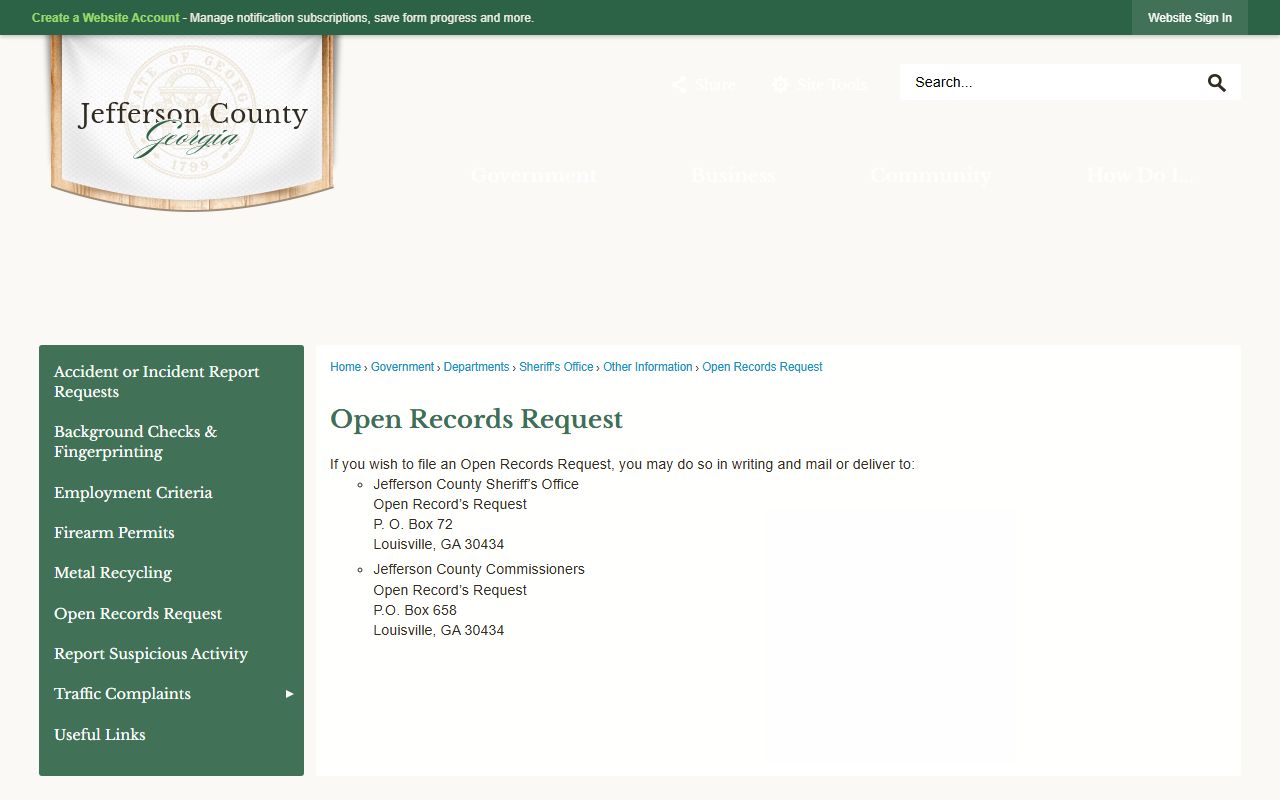
That request channel matters because no county booking search page was confirmed in the official sources.
Jefferson County Charges After Arrest
Charges after arrest are not always identical to the wording on the booking record. A deputy, police officer, or warrant may identify the suspected offense at arrest. The District Attorney then reviews facts, reports, warrants, witness material, and legal proof before filing formal charges. The Middle Judicial Circuit District Attorney serves Jefferson County along with Candler, Emanuel, Toombs, and Washington Counties. The Prosecuting Attorneys' Council listing identifies District Attorney Tripp Fitzner at Post Office Box 590, Swainsboro, Georgia 30401, phone 478-237-7846.
| Charging paper | Who uses it | What it does | Jefferson County context |
|---|---|---|---|
| Complaint or warrant application | Officer, affiant, or court process | States the alleged facts used to support arrest or court action. | Often tied to Magistrate Court, first appearance, warrant, or bond context. |
| Accusation | Prosecutor | Files formal charges without grand-jury indictment when Georgia law allows. | Can appear in State or Superior criminal files held by the Clerk of Superior Court. |
| Indictment | Grand jury | Charges felony counts after grand-jury action. | Felony prosecutions are routed through Superior Court. |
GBI criminal history can include arresting agency, arrest date, charges, and final judicial disposition data submitted by courts or prosecutors. That statewide history is useful, but it is not a substitute for the local court file. The local court file can show whether the filed charge was amended, dismissed, reduced, or resolved by plea or trial.
Jefferson County Charge Status
A charge status describes where a count stands in the court case. One arrest can lead to several counts, and each count can have a different result. A charge may stay pending while the case awaits arraignment or hearing. It may be amended when the prosecutor changes the wording or statute. It may be reduced as part of a plea or dismissed when the court or prosecutor ends that count. Georgia court records may also use nolle prosequi, which means the prosecutor declines to continue that charge.
| Status | What it means | What to verify |
|---|---|---|
| Pending | The charge remains open and has not reached final disposition. | Next hearing, bond terms, and whether the case is in Superior, State, Magistrate, or municipal court. |
| Amended or reduced | The filed charge changed from the original arrest or earlier court charge. | The date of amendment and the new offense wording. |
| Dismissed | The count was ended by court order or prosecution action. | Whether dismissal applies to one count or the whole case. |
| Nolle prosequi | The prosecutor chose not to pursue the charge further. | Whether any other counts remain pending. |
| Disposed | The count has a recorded outcome, such as plea, verdict, sentence, or dismissal. | The disposition date and sentence, if any. |
Sheriff Gary Hutchins' official profile confirms his role as sheriff and provides local law-enforcement context at the county staff page.
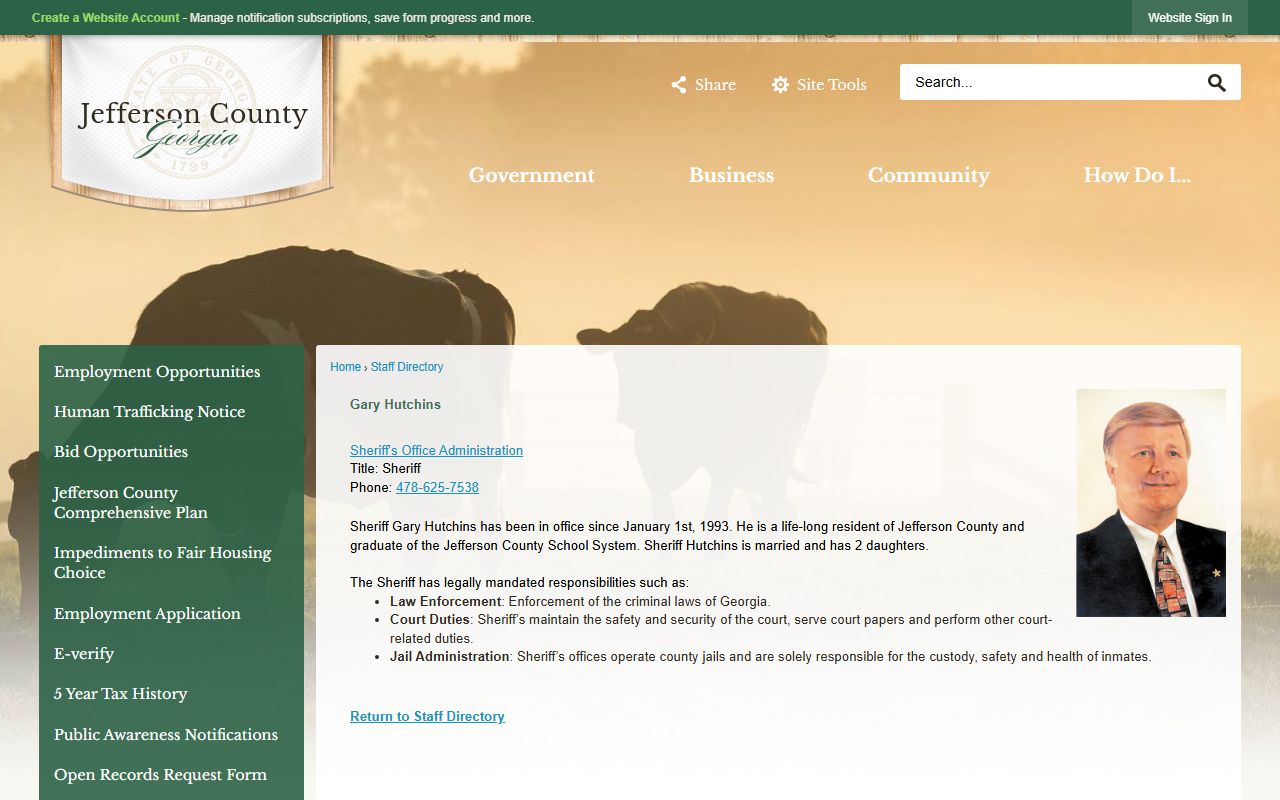
The sheriff's office may document the arrest event, but the charge status must be checked through court or prosecutor records.
Jefferson County Charges vs Convictions
A Jefferson County charge is an accusation filed or carried in a case. A conviction is a court result after a guilty plea, nolo contendere plea when treated as a conviction, or guilty finding. This distinction is central to arrest records because an arrest can exist with no conviction, and a filed charge can be reduced or dismissed before judgment. Public record users should avoid reading the arrest charge as the final case outcome.
| Point of comparison | Charge | Conviction |
|---|---|---|
| Stage | Allegation after arrest or prosecutor filing. | Final court result after plea or finding of guilt. |
| Record source | Booking, warrant, citation, accusation, indictment, or docket entry. | Disposition, judgment, sentence, or final docket entry. |
| Meaning | Shows what was alleged, not what was proven. | Shows legal responsibility as recorded by the court. |
| What can change | May be amended, reduced, dropped, or dismissed. | May be appealed, corrected, restricted, or sealed under separate rules. |
Bond and warrant entries can sit near charges in the court file. Bond is release from custody under financial or nonfinancial terms. A bench warrant or capias may appear if a person misses court or fails to comply with a court order. Those entries are not convictions by themselves.
GBI Criminal History Records
The GBI criminal-history FAQ describes Georgia criminal-history records as including arrest data and final judicial disposition data. The GBI route is separate from a Jefferson County clerk search. It may help when the question is statewide criminal history, background checks, or record restriction. The Sheriff's Office also lists GCIC among its divisions, but users should not assume every local court paper appears in a statewide criminal-history response.
GBI's criminal-history FAQ is captured in the manifest at the official GBI FAQ page.
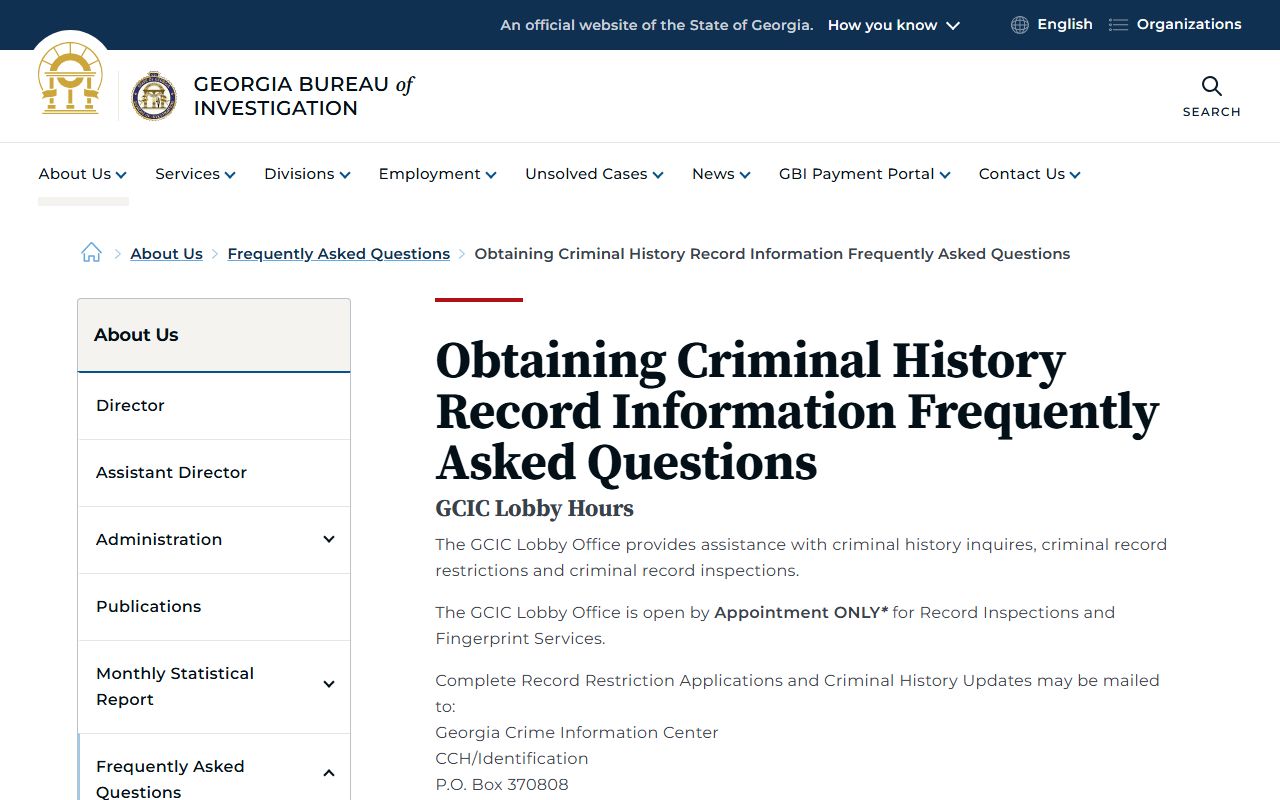
Statewide history is best read alongside the Jefferson County court disposition, since local case records may explain the final result.
For victim notification and custody status, Georgia also participates in VINELink. VINELink is a custody-notification tool, not a court charge database. It can help verify custody status after an arrest, while the charge and disposition still belong with the courts and prosecutor.
Georgia VINELink is shown at the official VINELink Georgia portal.

That custody-status tool can fill a gap when the county does not publish an online jail roster.
Restrict Eligible Arrest Records
Georgia commonly calls expungement "record restriction." The GBI record restriction page cites O.C.G.A. 35-3-37 and explains the split between newer and older arrests. For arrests after July 1, 2013, the person generally contacts the prosecutor to request restriction. For arrests before July 1, 2013, the applicant uses the arresting-agency route and the GBI form process. The arresting agency may charge up to $50, and some GBI processing may require a $25 money order or certified check if the prosecutor cannot enter the restriction directly.
The GBI restriction route is shown at the official Georgia criminal-history record restriction page.
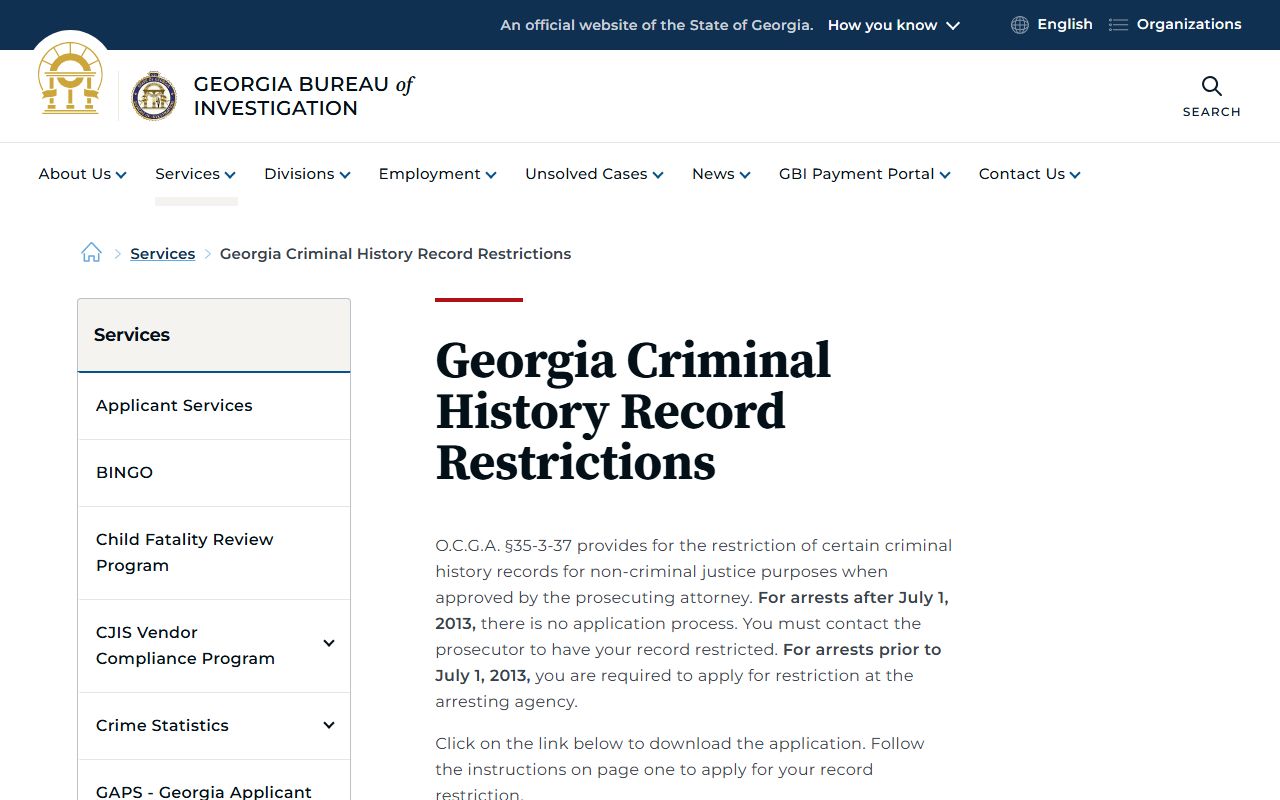
Restriction can limit criminal-history access, but it does not automatically erase every local court docket, jail record, or private copy.
| Access limit | What it does | What it does not do |
|---|---|---|
| Record restriction | Limits eligible Georgia criminal-history access for non-criminal-justice purposes. | Does not by itself seal every court filing. |
| Sealing | Limits public access to a court file or part of a file by law or court order. | Does not mean the arrest never occurred. |
| Redaction | Removes protected identifiers or sensitive data from public view. | Does not remove the whole case record. |
| Juvenile restriction | Keeps juvenile files outside normal adult public access. | Does not give public users a routine adult-style search route. |
Jefferson County Arrest Open Records
Georgia's Open Records Act, O.C.G.A. 50-18-70 et seq., presumes public records are open unless a law, court order, or exemption limits access. Court files also follow court-access rules, including Uniform Superior Court Rule 21 and Rule 21.6 for sealing and protected identifiers. For Jefferson County arrest records, the main issue is choosing the right custodian. The sheriff handles sheriff-created arrest, incident, inmate, accident, and citation records. The Clerk of Superior Court handles court charges and case files for Superior, State, and Juvenile Court records.
The Sheriff's Office other-information page describes incident reports, accident reports, background checks, fingerprinting, and related sheriff services at the official other information page.
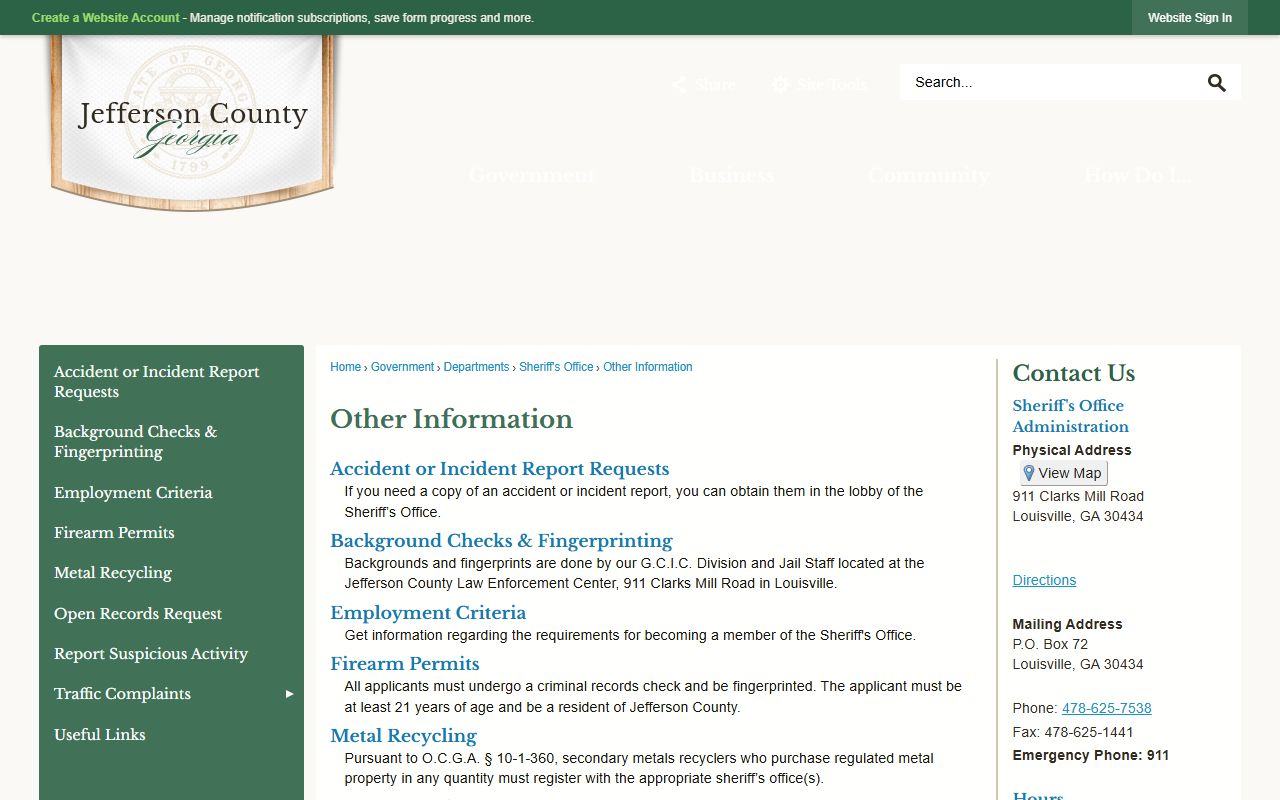
That page reinforces the split between sheriff records and the formal charge records maintained in court.
Important: Arrest records, court charges, and criminal-history summaries must not be treated as consumer reports for FCRA-regulated decisions.